Blog # 85…September, 2018
“A strange melancholy pervades me to which I hesitate to give the grave and beautiful name of sadness”  Opening words of  Bonjour Tristesse, which I read first when Francoise Sagan and I were both 18.  They’ve lingered with me all these years and capture what I usually feel at the change of seasons - particularly summer to fall - a strange melancholy.  It often takes the form of missing people and looking for ways to keep them in my thoughts. 

Priscila Uppal, Canadian poet, novelist, teacher and brilliant spirit died a couple of weeks ago, on my birthday. Her first novel The Divine Economy of Salvation and Winter Sport, the collection of poems written during her time as poet –in-residence at the Vancouver Olympics are two of my most precious  volumes.  Priscila and I met a number of times, at book launches, hers and others, at several readings she did in my Canada Council series, and most delicious of all we used to meet in the locker room of the Athletic Centre where I swim and she took diving lessons. We had many of those spontaneous conversations that undressing seems to provoke…about art and exercise and sport and other things that struck us at the moment. I value that connection enormously and am grateful for the memories that her work evoke.

On August 25th this year Leonard Bernstein would have turned 100 and although he died almost 20 years ago, his presence is still, well present.  An inspired composer and conductor, he could knock off a Broadway tune as well as a funeral mass for JFK;  conduct Brahms as well as Berlin.  I was lucky enough this summer to see a film featuring The Royal Ballet performing to three of his  very different compositions. The middle one The Age of Anxiety, based on WH Auden’s long poem, not only was a fore runner to West Side Story, but captured the angst of the day as well as of the composer.

The most difficult part of aging for me is the death of people I care about, whether they are public or private figures. In those internal conversations I have in the middle of the night, I remind myself of two things…to pay attention to present friends and relish their company, and to appreciate the creations of artists who have given us their work to enjoy.
See you next month


Blog # 84…August 2018

Museums connect us with the past: dinosaurs, native artifacts, Egyptian mummies - all fascinating glimpses of what the world was like before we arrived.   Increasingly, they also interpret our present with displays of fashion, media stars and social issues. Right now, a small gallery just inside the front door of the Royal Ontario Museum looks at the role of museums in the issue of artists and sexual harassment, called, predictably, #MeToo and The Arts.

Last Fall, at the Met Breuer in NYC a performance was staged by Jaishiri Abichandani at Raghubir Singh’s show Modernism on the Ganges. Abichandani alleged that Singh sexually abused her when she travelled with him as a young student of photography in the 90’s. Singh, who died in 1999, pioneered the form of colour street photography and a show of his work opened at the ROM on July 21.  Comments on his show and the demonstration at the Met Breuer form part of the content of #MeToo and The Arts at the ROM.

What should be done about the work of artists accused of sexual abuse reaches across all fields...should books be removed from libraries, films from festivals, canvasses taken down?  It resonates a bit with the issue of statues of Sir John A McDonald and other tarnished heroes who abused power. 

Should we remove the reminder of harmful acts from our past or use them as painful memories that make us consider present actions and shift thinking.  The Jews value Yad Vashem as a memorial to victims of the holocaust, honouring Jews who fought the oppression of the Nazis and the Gentiles who aided and protected them.

Our ability to forgive but not forget is complicated and individual, depending on how directly we've been affected. I'm always amazed by Izzeldin Abuelaish's ability to write I Shall Not Hate after the murder of his three children in the Israeli  invasion of Gaza.

There's also a continuum of offences...easier to forgive Al Franken than Harvey Weiinstein. 
I recently saw An Ideal Husband, apparently Oscar Wilde's favourite play.  It's about a wife forgiving a husband's secret... Wilde knew all about that.

Social media has gingered up feelings, getting the information out to us which is important, but often presenting it in a black and white, unconsidered form.  It's not that simple to line up villains and victims. Pointing fingers distracts us from focusing our energy in the right direction...and finding that direction isn't simple either.

News just broke of a noted feminist scholar being found guilty of sexual abuse of a male graduate student. Making the situation  slightly more complicated - the man is gay and married to a man, the woman is lesbian. It points out that there are challenges for all of us, feminists or not, male, female, gay straight or trans, old, young, whatever colour or income level, well you get my drift. We're all together in this struggle to make sense of life. 

I've just finished a wonderful book by Swedish physician and professor of international health Hans Rosling called Factfulness: Ten reasons we're wrong about the world and why things are better than you think. It's an interesting and important read, helped me on the road to looking at the world with more understanding and less anxiety and hopelessness. And that includes what I began with - art, artists and museums, Things are bad in many places, power differentials exist, but at least there is some movement towards looking. seeing and talking.

See you in September...


Blog # 83…July 2018

National Gallery
I’d never given much thought to Ottawa except as it appears in  some political context in the news…until I started going regularly about 10 years ago to visit a friend who relocated there. I was pleasantly surprised to find a transformation in the city. It now looks and feels like the capital of the country, representing us culturally as well as politically…not to mention in our national sport !
War Museum


Museum of History

 Three prominent galleries downtown, all cleverly placed on the river, are the works of Canadian architects: Moishe Safdie,  Richard Cardinal and Raymond Moriyama.  (Congratulations if you know which is which, if you don't, Google immediately.) All three have generous collections of indigenous art, proudly placed front and centre along with art from around the world.                   


There’s a new jewel in the city's crown with the recently opened Ottawa Art Gallery.  On the site of the former smaller gallery, it's a smooth blend of old and new, cultural and commercial.  The tower on the right features a small restaurant and display area connected to the gallery with a boutique hotel and condo development above. Next door, a marble staircase from the Firestone mansion in Rockcliffe takes visitors up to the second floor of the gallery (known affectionately as The Cube) where a home has been created for the family's collection of Canadian art. Space has been assigned for special exhibitions and for buying and selling art, workshops for kids and adults and for films, lectures, and classrooms for the University of Ottawa's theatre program. As with the other galleries, there are wonderful views of Ottawa to be had from several terraces and rooftops that serve as space for events or just a moment's rest to reflect.  On a wall beside of one of these views was an invitation to post responses to the question "If your life was a story, what would the title be?"  My favourite was "At least I tried."...words to live by.

Another recently opened and cleverly conceived space is the Wabano Meeting and Event Centre, available for rental and which can accommodate meetings and events from a dozen to several hundred people.  Rooms are simply decorated with aboriginal themes and equipped with the latest technology. The facility capitalizes subtly and effectively on the interest in approaching and understanding aboriginal culture and heritage that emerged from the Truth and Reconciliation committee. Since much of the Parliament Building space is undergoing a long term renovation,, creating space for meetings large and small is smart in practical terms as well.

Grand Gathering Space
So, next time you're in the market for a holiday and don't want to venture south of the border, think of our nation's capital, it's something to make us proud.
See you in August.

Blog # 82…June 2018

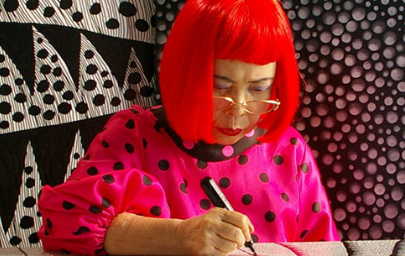
Yayoi Kusama’s blockbuster Infinity Mirrors at the AGO recently had everyone agog and lining up to scoot through the Infinity Mirrored Room. I didn’t get there, maybe you didn’t either, and too bad for us.  Luckily, we’ve got YouTube, where we can get a taste of her and her work from the comfort of our couches.  Not the same I know, but cheaper and more comfortable.

Known as the Princess of Polka dots, Yayio was born in 1928 in Matsumoto, Japan. She grew up in a repressive and controlling atmosphere, training in a traditional Japanese painting style called nihonga.  Art was her saviour, a world that she could control, and she turned her hallucinations into visual images. As with many artists whose work inspires the dismissive …”I (or my kid) could do that”...Yayio’s art is based on a strong foundation of skill in technique, colour, shape and form that comes from an early training and discipline.

Moving to New York in 1958, she quickly joined the group of avant-garde artists who were emerging and creating pop art in painting, music, film and fashion - hanging out with Georgia O’Keefe and Andy Warhol. She was daringly experimental during the sixties, staging several memorable performances involving naked people painted with brightly coloured polka dots.  Her art is complex, both whimsical and dark. She uses the dots to explore the infinity of the universe and the  spherical objects that surround us...the earth, moon and stars, ovaries, baseballs, oranges  - maybe that explains my fondness for ellipses...

 
In the seventies, she returned to Japan, seriously ill and in 1977, checked herself into the Seiwa Hospital for the Mentally Ill, where she’s  chosen to live ever since.  She goes daily to her nearby studio and has produced a large body of work, including several novels and Japan’s contributions to the biennales in Venice in 1993 and Singapore in 2006   Her autobiography Infinity Net was published in 2003 and her life and art are viewable on a number of screens (back to YouTube) most recently (2008) Kusama: Infinity.   


I’ve just scratched the surface of this fascinating artist (who was completely unknown to me before the AGO show). But her work and her life bring up thoughts of the connection and interplay between art and mental illness.  Just like all people who smoke marijuana don’t go on to be heroin addicts - remember that? - all people with mental illness don’t have artistic talents (although it demands a huge amount of creativity to get through their daily lives…but we'll leave that for another time).  The expanded visions, looser boundaries and frenetic energy that often accompany mental illness, as well as being intolerably painful to experience, can lead to amazing results.


See you in July.


Blog # 81…May, 2018


Sports are always in the news one way or another. As well as providing inspiration and diversion for many of us and career opportunities for a few, sports are now being credited with promoting world peace.  Ping pong diplomacy thawed relations between the US and China in the 70’s. Rapprochement on the Korean peninsula began in PyeongChang earlier this year with the athletes from the North and the South marching together in the opening ceremonies of the Olympics under a united flag.

I’d never thought much about sports' connection to art until I read Priscila Uppal’s wonderful collection of poems Winter  Sport published in 2010 after she’d been poet –in-residence at the BC winter Olympics...featured in Blog # 7…March 2011. The two worlds seem to be radically different but both involve passion, precision and practice with a focus on reaching that personal best.


There’s a certain aesthetic in the form of a swimmer going through the water or the grace of a high jumper clearing the pole. The Globe and Mail’s new format includes on Saturday a double page of the week’s top sports photos, some of which are breathtaking.


And I've happened to read a couple of  novels recently that have sport as their focus and it got me thinking that art and sport really do inhabit the same realm in different ways. Sergio de la Pava’s Lost Empress gives us a backstage glimpse at big league teams and their obscene wealth, exploring the world they inhabit and the lives and systems they impact.  I’m not much of a fan of anything but baseball, but am always interested in a good story and in entering terra incognita.
In 2015, Lawrence Hill wrote The Illegal, about a refugee who literally runs from persecution in his native country. He goes on to become a successful but underground marathon winner in the country where he lands.  His internal life is a moving tale of someone who can never run fast enough or far enough to escape his past, another unknown world and a good story.

From Priscila's poem about the courage of Joannie Rochette who skated to a bronze medal just days after her mother died, all along the line to the scenes of the crass manipulations of professional team owners in Lost Empresse, sports run the gamut.  Don't get me started on performance enhancing substances!

See you in June, let's think about how to understand what's going on with young men these days.


Blog # 80…April 2018

I realized as I started number 80 that I’m a blogaholic.  As each month rolls along, my compulsion to post takes over… always something to explore in the art that surrounds us.

We’re constantly being challenged to broaden our notions of what’s usual, normal or acceptable in the human condition in general and gender in particular.  How we respond to the challenges depends on our situation - whether and how we’re exposed to people who are different from us.  Thirty years ago we began to see stories of homosexuals presented in books and films and our friends, brothers, daughters and even our mothers had the courage to come out.  Still not easy, as you’ll find out if you go to see Love, Simon, a touching film about a gay high school boy…but coming out is only the beginning, being out is where it gets really hard. Supportive communities are in place in large centres, but small towns are still tough going.

In turn, the world of people with other different expressions of gender is beginning to become more open and very gradually more understood and accepted.  Again, books and film help to open our eyes to the humanity and struggles of individuals and of the people who love them.

Annabel, Kathleen Winter’s 2010 novel introduces us to an intersex child born in the 60’s in a remote community in Newfoundland.  We feel the challenges of growing up unique, with parents who had opposing views of which gender should be assigned.  It’s a masculine world with a stoic father who traps for a living, wants a son and calls the child Wayne.  She's Annabel to his fanciful mother when they’re alone, dressing up and dreaming of sequined bathing suits and synchronized swimming. Leaving for the broader world outside opens the search for ways to exist on her own terms.

In his latest film, Chilean director Sebastian Lelio introduces us to Marina, a transgender singer who has formed a loving relationship with an older man.  When the man dies, his family members scorn her and refuse to let her attend his funeral.  A Fantastic Woman is the film’s title as well as a perfect description of Marina.

Mchelle Alfano shares her story of welcoming a long awaited daughter in The Unfinished Dollhouse. Longing for a daughter and looking forward to building a dollhouse together, Michelle begins a troubled trip into motherhood with a premature birth and a vulnerable baby who survives and develops into a bright lively child. Until…a dark depression with confusion, anxiety and refusal to get out of bed culminates in Frankie’s revelation that she’s gay, a step on the road to realizing that she’s trans. Michelle’s compassionate and heartbreaking reaction to her daughter - now son’s – situation combines her emotional and intellectual responses with a candour and courage that will touch all parents, everyone for that matter.

Gender, parenting and relationships all offer us unique experiences with some common elements.  They are also ongoing and immensely complex and complicated.  Artists can help us enter stories that support our understanding of the world around us…it’s up to us to listen.

I’m also a swimaholic and on this International Day of Diversity, as I leave for the pool, here are some words to live by, from me and from Oscar Wilde…”Be yourself, everyone else is already taken.”


Blog # 79…March 2018

The world’s shifting population has ramped up in the past few years and it’s provided rich material for art forms to capture in fiction, film and theatre. 
And music…Safe Haven was a recent presentation by Tafelmusik, the baroque orchestra that performs at Trinity St Paul’s Centre in Toronto on instruments authentic to the period. Music has a way of conveying emotions that words on their own simply cannot. The concert offered some surprising revelations and changed our ways of hearing Bach, Vivaldi and Corelli amongst others.Threads of narrative were woven with music with a focus on the stories of refugee artists throughout history and the cross pollination that resulted.  

Here in Canada we've had the luxury of welcoming immigrants in a measured and somewhat controlled way.  Not so in some of the European countries, who've experienced sudden, overwhelming arrivals by water and on foot. Our eyes and hearts have been shocked by news photos of bodies lying on beaches and throngs of people hanging off the sides of small, unseaworthy looking objects.  A recent film from Finnish director Aki Kaurismaki – The Other Side of Hope takes us backstage in scenes where local Finns struggle with an influx of migrants, who look, speak and behave in alarmingly unfamiliar ways.  Despite Kaurismaki’s usual critical and unromantic look at his country and fellow citizens, he manages to represent the viewpoint and position of everyone in this film, - Finns, long term immigrants and recent migrants with clarity and humour.  At times they all warrant our attention, understanding, compassion and affection.

A number of novelists around the world have tackled migrants’ stories in their work, but the one that moved me and has stuck in my thoughts was a short story in The New Yorker many years ago.  An elderly woman had been brought from India to live with her son, his US born wife and their two children a few years after the death of her husband.  She had been happy enough in her village, but her son thought she must be lonely, so brought her to his large suburban house in California. Although she missed her friends and didn't speak English, she loved to clean, do the laundry and cook...only thing was, the neighbours objected when she hung the wash out in the garden, the family complained when she moved their things to clean...and they preferred pizza and burgers to her biryanis.

I often think of that woman, even if she was fictional, as we work to support our family from Iraq who arrived last July. Hiyam cooked us a wonderful middle eastern dinner last week for International Women's Day. We love her biryani, kubba and pomegranate salad ...and as we struggle to help her and her family adjust to life here, wonder if we're getting it right.