Blog # 97…September 2019

I love it when artists take a conventional medium and use unexpected images to make a point : the Afghan war rugs with helicopters and assault weapons woven into their fabric; Shary Boyle’s delicious Royal Doulton like figures doing naughty things (I’ll leave that to your imagination) and most recently, Ai WeiWei’s traditional  vase showing refugees on the move and in camps.

Diana Weymar
Diana Weymar
Now, Diana Weymar, a BC textile artist has a show of her work at the Lingua Franca boutique in downtown Manhattan of pieces where she’s placed Donald Trump quotes against backgrounds of pretty coloured flowers and lace. Her first piece was a floral cushion from her grandmother’s house onto which she stitched “I AM A VERY STABLE GENIUS” 


Carlton Scarlett
Andrea Honore
After she publicized the project, she began receiving stacks of embroidered Trump quotes. She photographs and posts them on Instagram where she has 13,000 followers, she considers the Instagram account a gallery that she curates.  “Decorative stitching is so subversive when it’s political” she says “It’s like the silent resisters. You don’t have to have a bombastic feed on Twitter, you can just pick up a needle and have a powerful  statement.”

Amy Marcus

Rowan Arberer


And the best part is that it’s called The Tiny Prick Project…


I can’t let the chance to honour the beloved Toni Morrison pass by, particularly since she spoke of language in her Nobel Prize acceptance speech in 1993.  So we’ll go out with her words “Oppressive language does more than represent violence, it is violence…whether it is the malign language of law without ethics, or language designed for the estrangement of minorities…it must be rejected, altered and exposed.”


Blog # 96…August, 2019                                                                                                            


It's easy to get caught up in the notion that making efforts to change the world aren’t worth it: it’s hopeless, too complicated, too entrenched, controlled by powerful people, and on and on. And yet…as Margaret Mead said “Never believe that a few caring people can’t change the world, for indeed, that’s all who ever have.”

On the last Sunday of the month, Toronto’s Kensington Market is taken over by a promenade of people enjoying the sights - of shops, cafes and each other.  Upstairs in a small venue, also on the last Sunday afternoon, poet bill bissett welcomes a group of people for a reading of poetry and prose at The Secret Handshake. Although it sounds like some sort of ancient order, it’s actually a very modern outgrowth of the movement to mobilize peers in supporting people with mental illness.


Founded in 2004 by Jordan Stone, The Secret Handshake provides peer support for individuals living in the community with schizophrenia. The treatment and support of any physical or mental illness needs to be specific to that illness, making the diagnosis specific model used at TSH the most appropriate and successful. Members mentor and share recovery techniques and resources and, most importantly, build friendships based on mutual trust and respect, breaking the cycle of isolation and stigma. Creative events and activities offer involvement to people who find conventional settings difficult to approach and/or unwelcoming.


Writing workshops, Honey Novick's voice yoga and story- telling groups are offered, along with a gallery to exhibit members’ art.  Drop ins and monthly readings bring members together in a normal and positive way to express and enjoy themselves. The Friendly Voice, a monthly newsletter ably edited by Michael Alzamora publishes new findings in the field of schizophrenia as well as announcing events and profiling individuals like John Nash, the Nobel laureate in economics, whose story of living with schizophrenia was told in the film A Beautiful Mind.
Events feature artists who read their work or exhibit their artwork, no distinction is made (or necessary) about mental status…we’re all there to listen and appreciate words or relish images. It’s a great resource for people to come and have a relaxing time with their friend or family member. Finding something to enjoy together is sometimes one of the most challenging parts of living with a mental illness.


It’s a small but very important initiative, so next time you have an idea about changing something, whether it’s big or small, give it a try, take a small step, you might be surprised.

And back to Margaret Mead to finish “Always remember that you are absolutely unique. Just like everyone else. “


 Blog # 95…July, 2019

A period should end a sentence not an education…who thought we’d see the words Academy Award and menstruation together? And nobody was more surprised than Melissa Berton and Rayka Zehtabchi, producer and director of Period.  End of Sentence, winner in the short documentary category at the Oscars in January.
Getty images: Kevin Winter
“I’m not crying because I’m on my period or anything”, said 25 year old Zehtabchi in her acceptance speech, before the stage was filled with jubilant women associated with the film.

It all began with The Pad Project, started by a group of socially conscious girls at Oakwood High School in Los Angeles - part of Girls Learn international, dedicated to helping educate and lift the status of girls worldwide. Lack of access to sanitary pads causes girls in many countries to miss school during their periods, sometimes dropping out entirely.  Menstruation is a source of shame and isolation and women resort to fashioning protection from unclean rags or leaves, with the danger of infection.


The film takes place in Haipur, a town outside Delhi, where a machine to manufacture pads from natural local materials has been installed and is being operated by local women...money for the machines was raised by the girls in LA with a series of bake sales and yogathons. Menstruation faces a particularly intense stigma in parts of India, where women are not only isolated but prohibited from entering holy places for fear of contamination.

In this quiet sexual revolution, women learn to operate the machines, making low cost, biodegradable pads. They’re also trained to be part of  the sales force, giving them both financial support and a sense of independence and getting the pads to the girls and women who need them.     

As one of the girls from Oakwood pointed out though, "It's’s not just in India that we need to break the taboo on menstruation and empowering women, we’ve got work to do here too".                                                                                                                                                                                                                                                                                                                                                                                                                                                                                                                                                                                           


Blog # 94…June 2019

I'm with Emma Goldman…one of the problems with the world is that we don’t dance enough. The worse it gets, the more we need to dance - when we’re not trying to change things.

So, whenever I see something about people dancing, I perk up and feel a little shiver (or a frisson for you Francophiles) of pleasure. Combining movement and music and maybe a hug with someone you fancy, what could be better? I wrote a while ago about people with Parkinson’s being stimulated by music and able to overcome some balance issues and strengthen muscles by dancing -  not to mention doing something that made them feel normal.


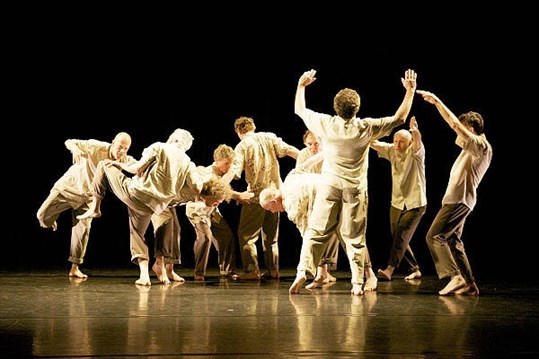
Now I’ve heard about a group called Old Men Dancing, who are performing in Peterborough (maybe other Canadian centres too) as part of Public Energy Performing Arts.  The group formed in 2002, with men over 50, late bloomers one might say. They perform contemporary pieces created for them by accomplished choreographers, using Feldenkreis techniques to focus on body alignment. The spiritual elements of dance and the expression of emotion and the ability to touch each other without awkwardness are a refreshing change for the men of a somewhat buttoned-up era.

So, next time you're feeling the burdens of the world heavy on your shoulders, get up and do a gentle soft shoe or even a pirouette...and remember the brave Canadian men who landed on the Normandy beaches 75 years ago today.
Go Raptors!


Blog # 93…May, 2019

As we all get older, knees and hips cry to be replaced, eyes and ears demand augmentation and our brains approach their best-by date too.  Dementia in its various forms starts to affect our friends and we wonder if that forgotten name or misplaced item might herald a similar fate for us.  There aren’t any surgeries or appliances to replace our thinking function and all the word games, jumping jacks and kale salads aren’t going to ward off the brain chemistry that can shift and makes us a different person. 

That’s the key phrase – still our father, sister or lifelong friend but somehow different, and everything changes.  Someone called dementia the disease of the beholder, we may suffer more than the person directly affected, and that’s where it becomes immensely challenging for us. We’re used to a relationship with a set of behaviours based on experience, roles and shared memories and now we need to find ways to maintain the relationship with a different set of rules. And, even harder, maybe just some of the time, because disorders of the mind shift around and sometimes memories appear unexpectedly and lost inhibitions return.

A couple of years ago, I saw a show at a small gallery in Durham (a small community an hour’s drive north and west of Toronto) by local artist Tony Luciani called Mama in the Meantime. Tony had taken a series of photographs of his mother Elia after she came to live with him when she was 91 and needed his support. It was a “photographic dialogue between mother and son” done with affection, humour and a shot of reality. Rather than chafing at the responsibility and regretting what was lost, Tony included Elia in his art practice, confronting aging and frailty and managing to hold on to some childhood dreams.


Tony's photos speak for themselves...
When a Child Has a Child
I'm Not Half the Person I Used to Be
                                                                       
Dining with Herself
   The message is -  don't abandon ship, find a way to stick around, it's important work.


Blog # 92… April 2019

China has been much on our minds lately and not in a particularly good way – Huawei, political prisoners caught in the middle of trade wars, canola - seemed a good time for seeing an Ai WeiWei show and tuning in to his sense and sensibility.

The Gardiner Museum continues its creative programming with Unbroken, running until June 9, a small and delicious sample of artist/activist Ai’s work using ceramics as his medium.
Ai flashed across the art world a few years ago when he purposely dropped a Han dynasty vase, (there’s a photo of him doing this) smashing it as a symbol of how he wanted to smash conventions and up-end cultural conventions and materials in his native China. It also references the destruction of many art works during the Cultural Revolution. Obviously, this, along with other acts of rebellion against tradition angered many people, in China particularly.  Ai was imprisoned and now lives in exile in Berlin.


The centerpiece of the show is a tall pillar composed of six large blue and white vases. On first glance, they look like conventional designs, but closer up, the images emerge as scenes of lines of refugees marching across desolate landscapes or camps of tents and children playing in the dust. Using the familiar colours and shape leads us to expect one thing and be shocked by what we see, more effective than columns of print.  


The famous sunflower seeds, each created individually by a pair of hands, appear again (they were in the Tate modern a few years ago and at the AGO too).  This time, they form a pyramid against a background of a series of large Lego panels featuring digitized images of the animals of the Chinese zodiac.


Most of the objets in the show speak in ways both whimsical and serious to boundaries, both real and symbolic, social justice abuses, freedom of speech, and repression of dissent. Two delicately crafted pairs of handcuffs, one in rosewood, the other jade remind us that Ai has direct experience with repression.  He’s paid the price for expressing his ideas, both with time in prison and being forced to live away from his homeland. 

I enjoyed this show with Marian Kenny, a dear friend who died a few days later. This is for her.


Blog # 91…March 2019

As our world becomes more multi-everything, less uniform, less predictable, less safe, more edgy, we’re struggling with how to react, how to place ourselves. Do I always seem to be saying that art is the answer to just about everything?  Well I don’t see anything else stepping up, so I’ll just carry on.

Here are some things that have helped contain and explain my world lately.  February was Black History Month and I was lucky enough to catch Trey Anthony (Da Kink in my Hair) in her one night stand trying out Oh no!  I’m Becoming my Mother. Again, she captures the unique experiences and reactions of black women in Canada.

Cecil Foster’s new book, They Call Me George, recalls the world and the role of sleeping car porters, almost always black men, on Canada’s cross country railway trains. A particularly moving passage involves the war brides who arrived in the late 40’s and early 50’s - young women, some with babies or small children. They arrived in Halifax after a sea crossing, ready to make the long journey into a strange country to begin new lives with husbands they may have barely known. The sleeping car porters were their first contact. “George” as all the porters were known (diminishing their identity) welcomed them, introduced them to the country as they travelled, often holding babies and warming their bottles.

And Jordan Peele’s If Beale Street Could Talk, adapted from a story by James Baldwin is a companion piece to Moonlight, giving us a look at an ordinary black family, their hopes and dreams, loves and lives.
A play, a book and a movie to think about.

Kate Harris just won the Charles Taylor non-fiction prize for Land of Lost Borders.  When I was in about grade three, we devoured a series about explorers. They were fabulous books, written from the point of view of a child travelling along on the voyage. My favourite was I Went With Marco Polo (closely followed by I Went With Vasco de Gama). Kate Harris also has a fascination with explorers, a longing to know about what lies outside our personal world. She took her fascination on a bicycle to travel the Silk Road…she went with Marco Polo!  Her trip was exotic and challenging, but her message is that anyone can explore anywhere …”if you’re willing to pay the world a certain intensity of attention”.

I haven’t mentioned our Iraqi family for a while, but our annual International Women’s Day dinner this year included Hiyam (the mum) who helped us welcome two recently arrived Syrian women. Warm feelings and wonderful food, from both east and west.